
State Configuration
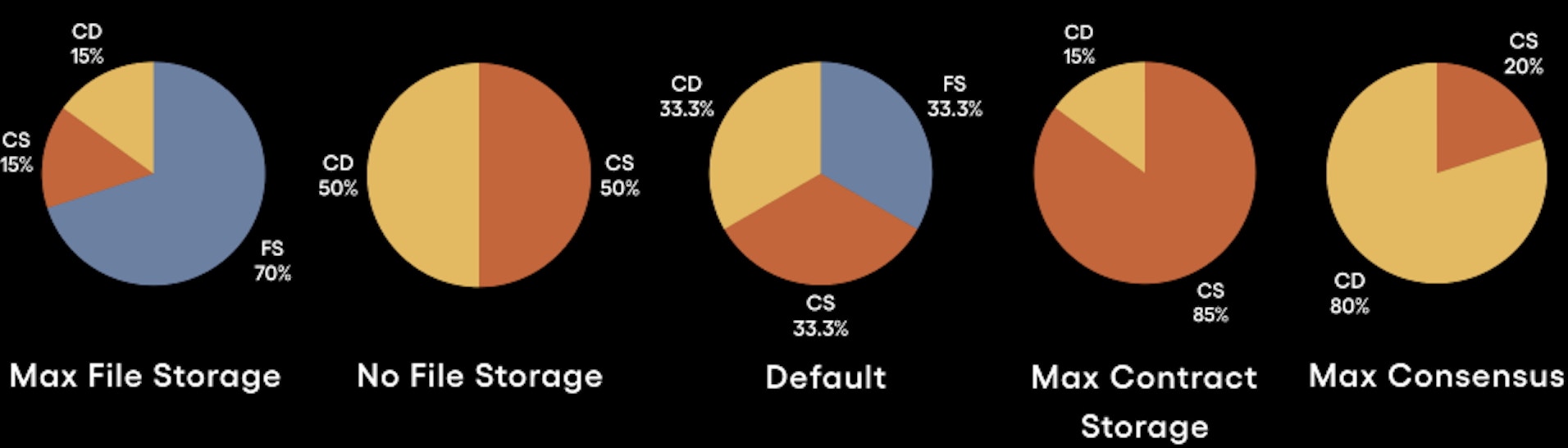
One of the most important decisions made when creating a new SKALE Chain is where the state is going to be allocated. There are three areas that node storage is allocatable too:- Consensus Database: the area of the node responsible for storing block data
- Contract Storage: the area of the node that stores active contract state
- Filestorage: the area of the node responsible for storing files uploaded or replicated via SKALE Filestorage

Transaction Processing
SKALE Chains have two options when it comes to transaction processing.- Standard Processing: allows for a single transaction per account/wallet per block. Great for chains interested matching Ethereum’s transaction processing architecture
- Multi-transaction Mode (Recommended): great for chains catering to high-throughput applications